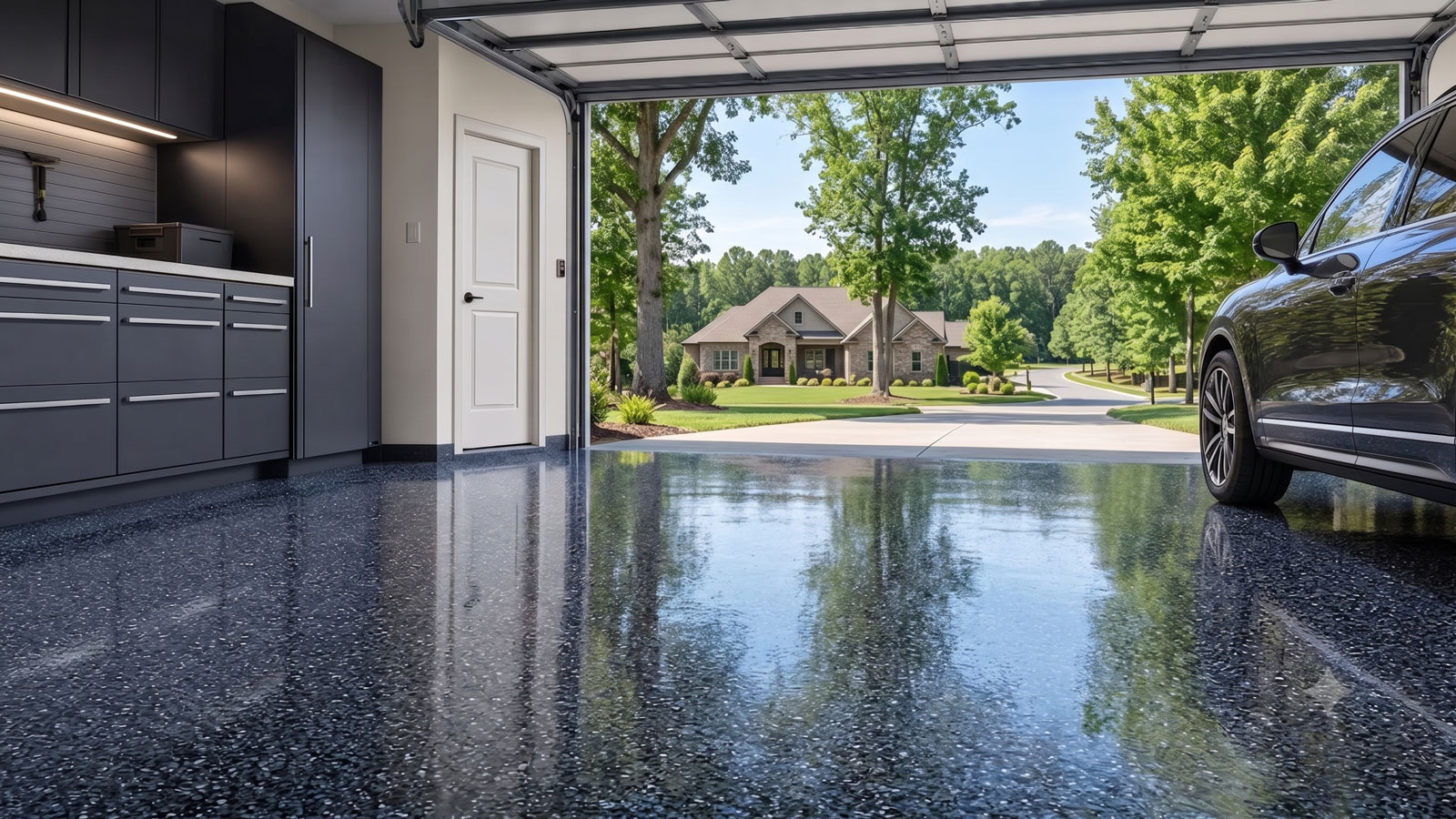
Garage Floor Coating in Camillus, NY
Floor Coating Services in Camillus, NY
Camillus is a major western Syracuse suburban territory, providing a geographic counterpart to the eastern DeWitt and Manlius corridor. That local development pattern matters because garages from different eras can have very different slab histories. Older or altered concrete may carry paint, repairs, stains, or later pours, while newer concrete can still have curing products, dense finishing, builder sealers, or patch work that requires mechanical preparation.
A western-suburb garage can accumulate winter slush, meltwater, road salt, and grit from normal vehicle use. The Onondaga Lake watershed, local creeks, low areas, and municipal drainage systems make snowmelt and runoff worth checking at the actual driveway and garage threshold. For the homeowner, driveway pitch, downspout discharge, threshold entry, and damp edges are the useful evidence to inspect before moisture is treated as part of the coating scope.
The coating choice should follow the floor's condition, the desired appearance, and practical issues such as cure timing and maintenance. Central New York sees lake-effect snow, long freezing periods, road salt and brine, spring meltwater, and humid summer weather. The coating plan should keep preparation, drainage, garage use, and finish selection as separate decisions so regional weather does not get mistaken for a property-specific slab problem.
Local Market Insight
Camillus is a major western Syracuse suburban territory, with approximately 79.4% owner occupancy and a median owner-occupied housing value of about $209,000 at the town level.
What Affects the Cost of Garage Floor Coating in Camillus?
Project scope in Camillus can change with old coating removal, builder surface treatments, cracks and repairs, recurring threshold moisture, storage, and access. Two similar-size garages may therefore need very different preparation, so the estimate should explain the work that changes labor rather than rely on square footage alone.
- Existing coatings and contamination: Paint, sealers, failed coatings, oil staining, adhesive residue, and weak patch compounds should be identified before grinding so incompatible material is not trapped below the new system.
- Camillus slab history: Camillus is a major western Syracuse suburban territory, providing a geographic counterpart to the eastern DeWitt and Manlius corridor. That makes building era a useful clue, but the surface still has to be evaluated directly before removal, repair, or profiling is specified.
- Weather and vehicle exposure: A western-suburb garage can accumulate winter slush, meltwater, road salt, and grit from normal vehicle use. In practice, lake-effect snow, road salt, brine, meltwater, grit, and freeze-thaw exposure can affect cleaning, traction, or maintenance needs without changing the requirement for sound mechanical preparation.
- Drainage and recurring moisture: The Onondaga Lake watershed, local creeks, low areas, and municipal drainage systems make snowmelt and runoff worth checking at the actual driveway and garage threshold. Recurring threshold entry, persistent dampness, mineral deposits, or previous blistering should be investigated before the coating is expected to solve a water problem.
- Cracks, joints, and edges: Stable cracks, control joints, patch edges, steps, stem walls, and perimeter grinding can add labor even when the main open floor is otherwise straightforward.
- Layout and return-to-use: Cabinets, storage, multiple bays, workshop equipment, family-entry traffic, and parking schedules affect staging and cure planning independently of the main floor area.
Call for a clear, project-specific estimate — or request one online.
Camillus Development Pattern, Concrete History, and Preparation
Camillus is a major western Syracuse suburban territory, providing a geographic counterpart to the eastern DeWitt and Manlius corridor. That context helps explain why nearby garages can come from different construction periods and remodeling histories. The useful question is not simply whether a home is old or new, but what materials, repairs, coatings, or construction treatments are actually present on the floor.
Preparation should reach sound concrete rather than merely roughen whatever is already on top. Paint, clear sealer, weak patch material, adhesive, oil contamination, or a prior coating can change the removal and grinding plan, while cracks and joints may require separate treatment decisions.
Newer-looking concrete can still need substantial work. Dense finishing, curing compounds, smooth surfaces, builder sealers, and construction patches can interfere with adhesion. A useful proposal should describe grinding, repairs, joint treatment, edge work, and removal before the decorative system is installed.
Camillus Weather, Drainage, and Everyday Garage Use
Central New York sees lake-effect snow, long freezing periods, road salt and brine, spring meltwater, and humid summer weather. The Onondaga Lake watershed, local creeks, low areas, and municipal drainage systems make snowmelt and runoff worth checking at the actual driveway and garage threshold. Those regional conditions are useful context, but the decisive evidence remains at the property: driveway grade, downspouts, threshold marks, damp edges, floor drains, and any history of recurring water entry.
Lake-effect snow, road salt, brine, meltwater, grit, and freeze-thaw exposure should be removed rather than allowed to remain as an abrasive or contaminating layer. A coating can make cleanup easier, but it cannot correct exterior grade, redirect runoff, or eliminate chronic moisture from below the slab.
Garage use adds another layer to the plan. Parking, storage, tools, lawn equipment, hobbies, cabinets, steps, and family-entry traffic affect traction, staging, edge work, and return-to-use timing. Finish choice should follow those real uses after the concrete and moisture questions are understood. Before installation, the estimator should also identify door-edge sun exposure and any areas that are hard to clear for grinding. That check should happen before the installation schedule is finalized.
Camillus Garage Floor Coating FAQs
Why can two Camillus garages need different preparation?
Concrete age, previous coatings, repairs, builder treatments, contamination, and later pours can differ even on nearby properties. The actual slab should determine removal, grinding, repair, and joint work.
What local weather exposure matters in Camillus?
The useful concern is the real exposure created by lake-effect snow, road salt, brine, meltwater, grit, and freeze-thaw exposure. Cleaning and traction needs should be separated from recurring threshold or slab moisture.
Does local drainage automatically mean a Camillus slab has a moisture problem?
No. The Onondaga Lake watershed, local creeks, low areas, and municipal drainage systems make snowmelt and runoff worth checking at the actual driveway and garage threshold. Recurring entry, persistent dampness, mineral deposits, or prior coating failure are the property-level signs that justify deeper investigation.
Can a newer Camillus garage still need substantial grinding?
Yes. Curing compounds, sealers, dense finishing, smooth surfaces, and builder repairs can interfere with adhesion even when concrete looks clean and lightly used.
What can add cost beyond the open floor area?
Steps, stem walls, edges, cabinets, storage, old-coating removal, repairs, multiple bays, joints, and staging can all add labor that a project-specific estimate should identify.
Camillus Neighborhoods & Local Context
Phone Quote Line
Speak with a floor coating specialist about your project and get a realistic estimate range.
315-888-4007Typical Project Cost
$3,000–$5,500
Typical range for a two-car garage. Final pricing depends on floor size, concrete condition, prep work, coating type, and finish options.
Helpful Guides
Other Service Areas